Deformed
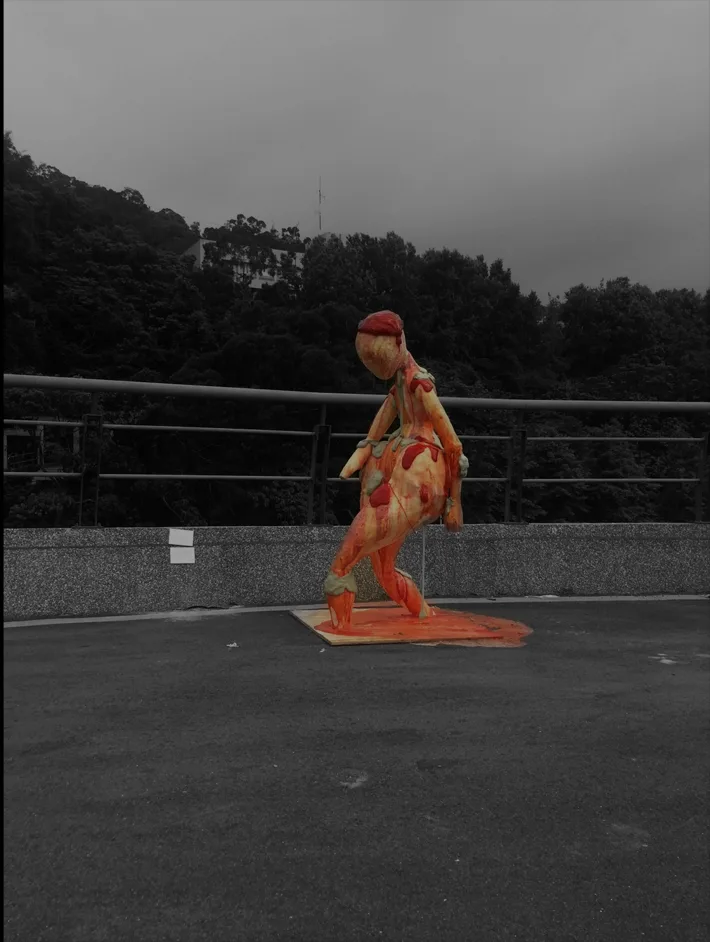
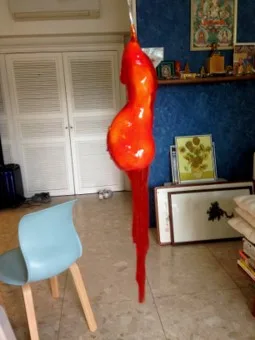
On the slope of the riverbank, a life-sized sculpture stands. Take a closer look, a body slimed with colored glue which flows through the surface and going down-ward to the ground. Some mucus had been air-dried and left scars on the skin.
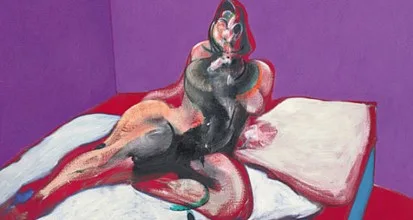
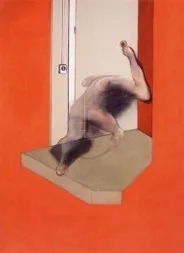
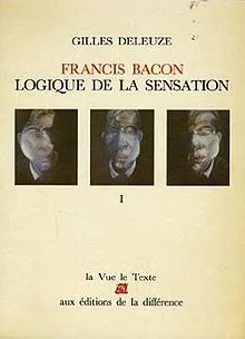
The idea had come upon a book written by Gilles Deleuze, Francis Bacon: The Logic of Sensation. It has introduced me not only to complementary concepts in Deleuze, but also to emerging those concepts with Bacon’s works. The book gave me some inspiration of the body escaping from its figure.
Deleuze effectively rethinks the” mind–body problem” through the "athleticism" of meat; "meat," for Deleuze, is a concept that describes a zone of indiscernibility between flesh and bone. Speaking of Bacon's 1975 Three Figures and a Portrait, he notes that "meat is the state of the body in which flesh and bone confront each other locally rather than being composed structurally" (p. 20-21). In this way, "the bones are like a trapeze apparatus (the carcass) upon which the flesh is the acrobat" (p. 21). For Deleuze, the real tension is not between body and mind (or even body and soul), but rather between flesh and bone.
After lots of material experiments, I found an interesting solution was a reversible cross-linking gel, formed by Borax and PVA Polymer’s chemical reaction.
“PVA has a repeating vinyl alcohol unit with a molecular formula of [-CH2 CHOH-]n.
Borax, ie sodium tetraborate decahydrate, Na2B4O7.10H2O, when dissolved in water, hydrolyses to form a boric acid-borate ion solution with a pH of about nine.” ---from Wikipedia.
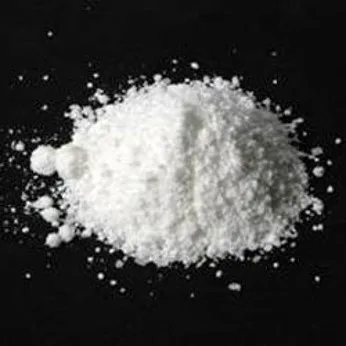
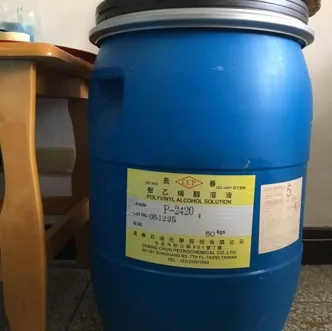
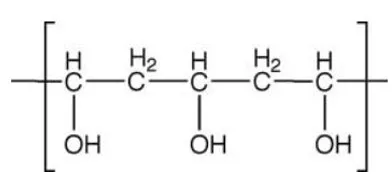
PVA glue contains, amongst other things, the polymer polyvinyl alcohol (also called polyethenol). Polyvinyl alcohol has the structure:
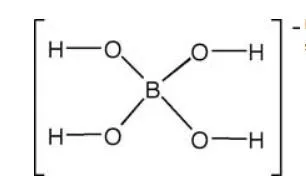
Borax forms the borate ion when in solution. This ion has the structure:
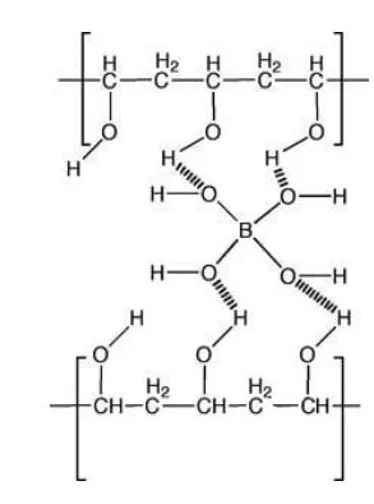
The borate ion can make weak bonds with the OH groups in the polymer chains so it can link the chains together as shown below. This is called cross-linking:
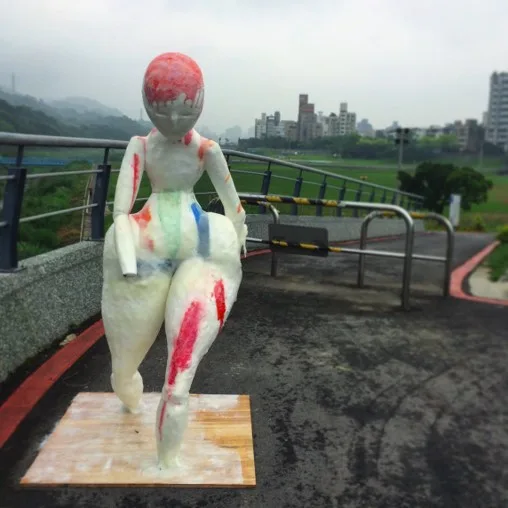

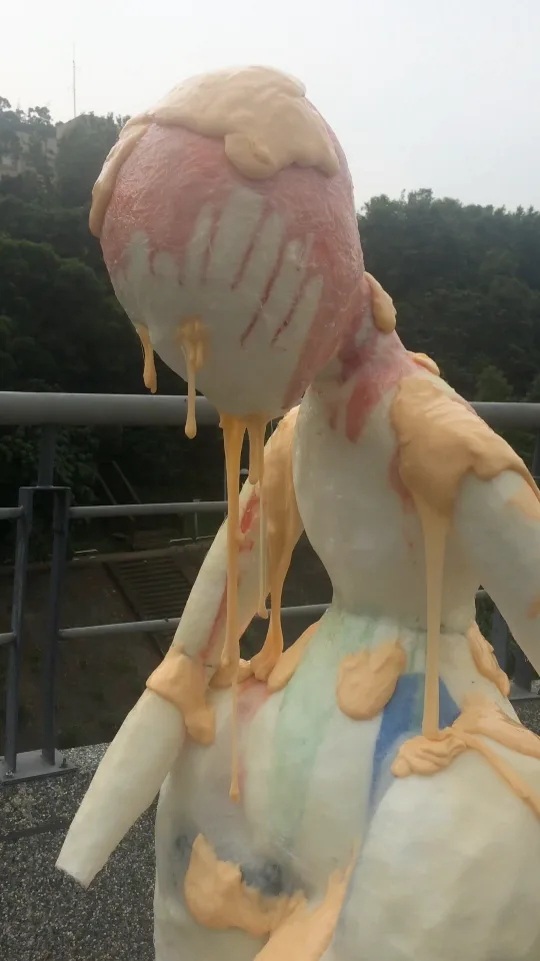
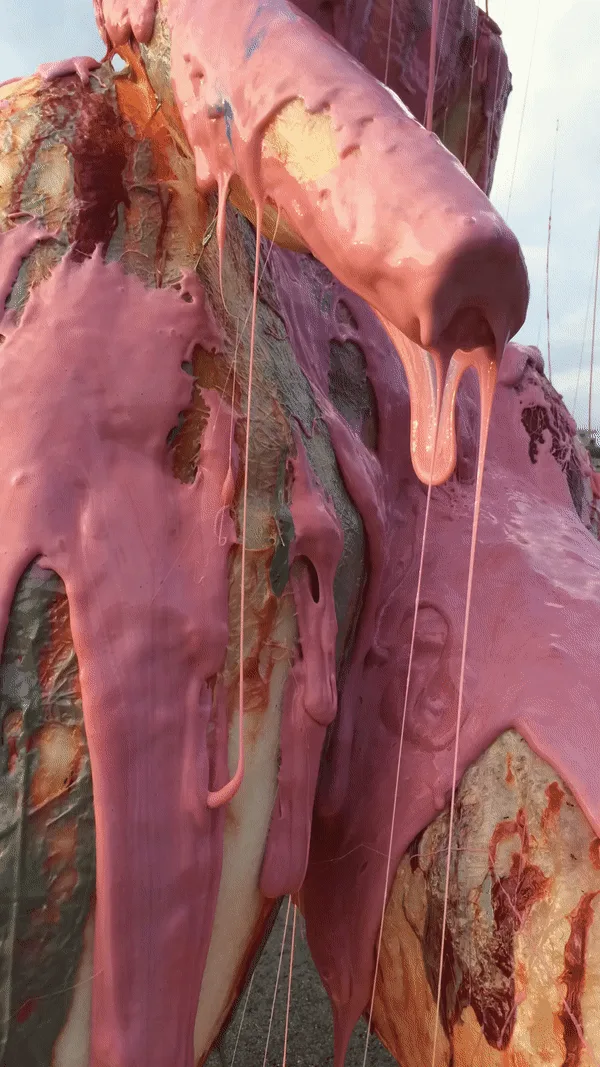
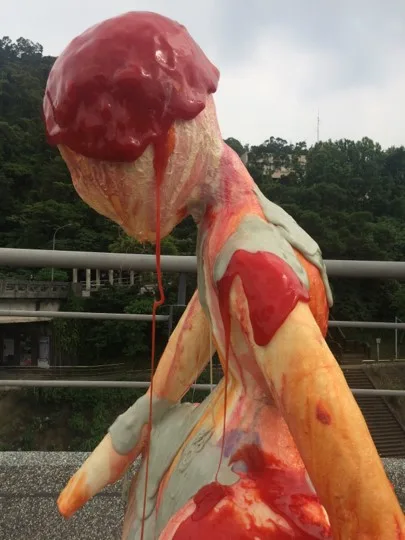
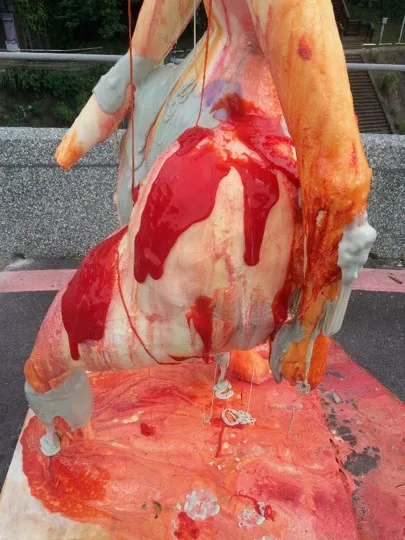
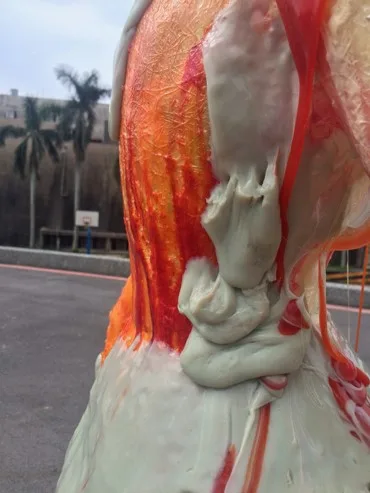
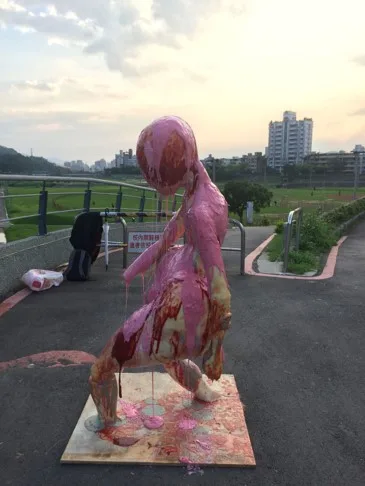
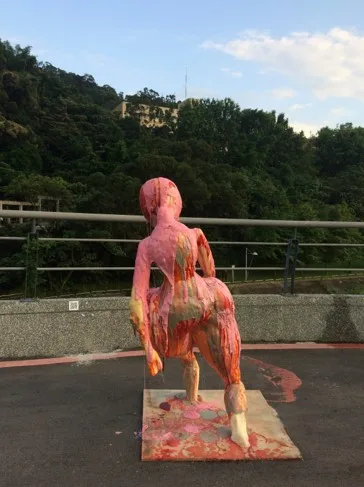
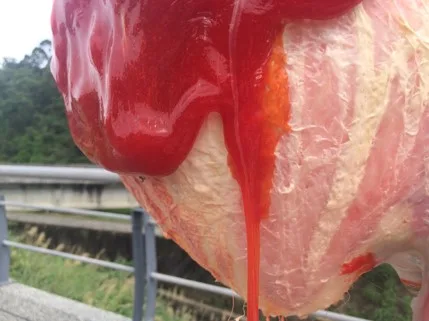
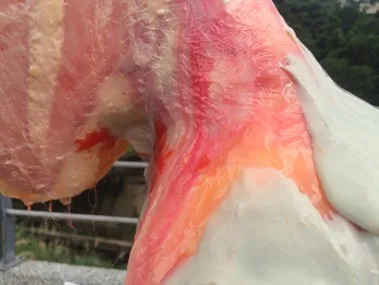
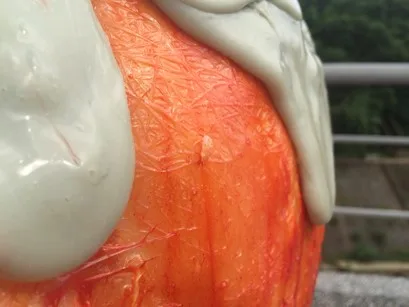
Placing it on the slope’s top, as a way for people to climb up for achievements or other reasons. At the end, your body was disrupted and fell from your figure. Deforming is a process as we‘re human beings. Life is time-based, so is my sculpture. I want to emphasise the transformation of time. When our body is no longer functional, we might realise the freedom of mind or soul. Like Deleuze’s concept ”Body without organs”, I tried not to carve out the feet, hands, and facial features. Without those, we still recognised it as a human figure, and the direction of its movement. And we can spend more time observing the disruption of the gel.
“When you have made him a body without organs, then you will have delivered him from all his automatic reactions and restored him to his true freedom.[2]”
In the video above, there was an old lady who spoke that,
“How ugly it is! It’s awful.
Looks like a fire-burned person, full of scars.
What kind of art is it?
It’s not art.”
In her speech, has recorded a disagreement with the audience, and it represented to lot of people in my University who don’t like this sculpture. I was upset and a little bit mad at the time. But soon I realised that I didn’t do a wrong thing or a bad work. It just shows the distance between me and a great artist who gives strong expression and energy to audiences, revealing the thought the artist wants to convey. I might not be successful in delivering my idea to people. But it was still a great experiment for the environment, the people and for myself. I engaged in the interaction with these subjects, and so did the old lady.